
EU4Blue - A Wave for Ocean Literacy
EU4Blue - A Wave for Ocean Literacy
Access to clean water is essential for human health and well-being. Explore the connections between water quality, sanitation, public health and social equality, and discover why protecting water resources is a shared global responsibility.
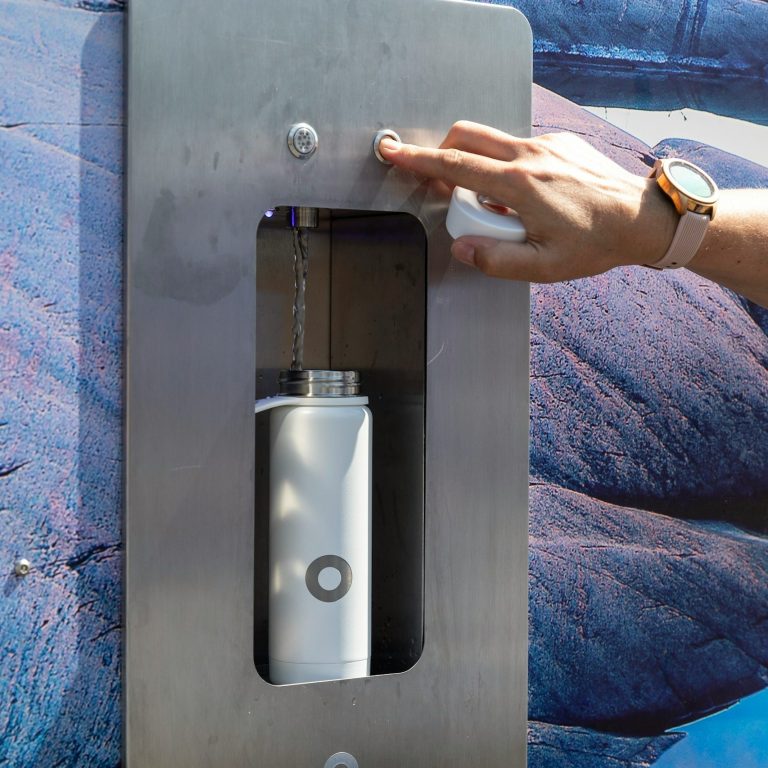
WaterWise Campus – The Refill Challenge
60-90 minutes, level C1, 15-18 years
Four refill stations, but too many unsuccessful attempts: what is stopping students from accessing drinking water? Teams investigate a fictional school using observation data and evidence cards, challenge misleading health claims and design improvements within a limited budget. The activity connects water, health and inclusion while developing critical thinking and communication skills.
Includes printable evidence and action cards, a visual station overview, worksheets, teacher guidance and suggested answers.
WaterWise Campus – The Refill Challenge
60-90 minutes, level B2-C1, 15-18 years
Four refill stations, but too many unsuccessful attempts: what is stopping students from accessing drinking water? Teams investigate a fictional school using observation data and evidence cards, challenge misleading health claims and design improvements within a limited budget. The activity connects water, health and inclusion while developing critical thinking and communication skills.
Includes printable evidence and action cards, a visual station overview, worksheets, teacher guidance and suggested answers.
WaterWise Campus – The Refill Challenge
60-90 minutes, level B1-B2, 15-18 years
Four refill stations, but too many unsuccessful attempts: what is stopping students from accessing drinking water? Teams investigate a fictional school using observation data and evidence cards, challenge misleading health claims and design improvements within a limited budget. The activity connects water, health and inclusion while developing critical thinking and communication skills.
Includes printable evidence and action cards, a visual station overview, worksheets, teacher guidance and suggested answers.

Who gets the water? – Your Town, Your Summer. Your Call. (A Simulation)
90 minutes, level C1, 16+ years
A dry summer in Riverton. Competing demands. Not enough water for everyone’s plans. Who should make the cuts—and who carries the consequences?
In this interactive simulation, students represent farmers, bottling workers, young residents and the local council. They negotiate a limited water budget, challenge misleading social-media claims and respond to an unexpected update before presenting their decision to the town.
A short source comparison introduces a real-world debate. The negotiation then uses a clearly fictional scenario with original role cards and data.
Who gets the water? – Your Town, Your Summer. Your Call. (A Simulation)
90 minutes, level B2-C1, 16+ years
A dry summer in Riverton. Competing demands. Not enough water for everyone’s plans. Who should make the cuts—and who carries the consequences?
In this interactive simulation, students represent farmers, bottling workers, young residents and the local council. They negotiate a limited water budget, challenge misleading social-media claims and respond to an unexpected update before presenting their decision to the town.
A short source comparison introduces a real-world debate. The negotiation then uses a clearly fictional scenario with original role cards and data.
Who gets the water? – Your Town, Your Summer. Your Call. (A Simulation)
90 minutes, level B1-B2, 16+ years
A dry summer in Riverton. Competing demands. Not enough water for everyone’s plans. Who should make the cuts—and who carries the consequences?
In this interactive simulation, students represent farmers, bottling workers, young residents and the local council. They negotiate a limited water budget, challenge misleading social-media claims and respond to an unexpected update before presenting their decision to the town.
A short source comparison introduces a real-world debate. The negotiation then uses a clearly fictional scenario with original role cards and data.

Water Changes Her Day - Water, Time and Opportunity
90 minutes, level C1, 16+ years
Two students. The same examination. Different control over their time. When does better water access become a fairer opportunity?
This resource explores the connections between water, unpaid work, gender equality and education. Students analyse an original opinion article, interpret published data and investigate the claims of a fictional water project. They examine whose voices shape decisions and develop their own reasoned response through a comment or a speech.
The material develops critical reading, rhetorical analysis, evidence-based argumentation and discussion skills and includes teacher guidance, suggested answers and assessment criteria.
Water Changes Her Day - Water, Time and Opportunity
90 minutes, level B2-C1, 16+ years
Two students. The same examination. Different control over their time. When does better water access become a fairer opportunity?
This resource explores the connections between water, unpaid work, gender equality and education. Students analyse an original opinion article, interpret published data and investigate the claims of a fictional water project. They examine whose voices shape decisions and develop their own reasoned response through a comment or a speech.
The material develops critical reading, rhetorical analysis, evidence-based argumentation and discussion skills and includes teacher guidance, suggested answers and assessment criteria.
Water Changes Her Day - Water, Time and Opportunity
90 minutes, level B1-B2, 16+ years
Two students. The same examination. Different control over their time. When does better water access become a fairer opportunity?
This resource explores the connections between water, unpaid work, gender equality and education. Students analyse an original opinion article, interpret published data and investigate the claims of a fictional water project. They examine whose voices shape decisions and develop their own reasoned response through a comment or a speech.
The material develops critical reading, rhetorical analysis, evidence-based argumentation and discussion skills and includes teacher guidance, suggested answers and assessment criteria.
Wir benötigen Ihre Zustimmung zum Laden der Übersetzungen
Wir nutzen einen Drittanbieter-Service, um den Inhalt der Website zu übersetzen, der möglicherweise Daten über Ihre Aktivitäten sammelt. Bitte überprüfen Sie die Details in der Datenschutzerklärung und akzeptieren Sie den Dienst, um die Übersetzungen zu sehen.